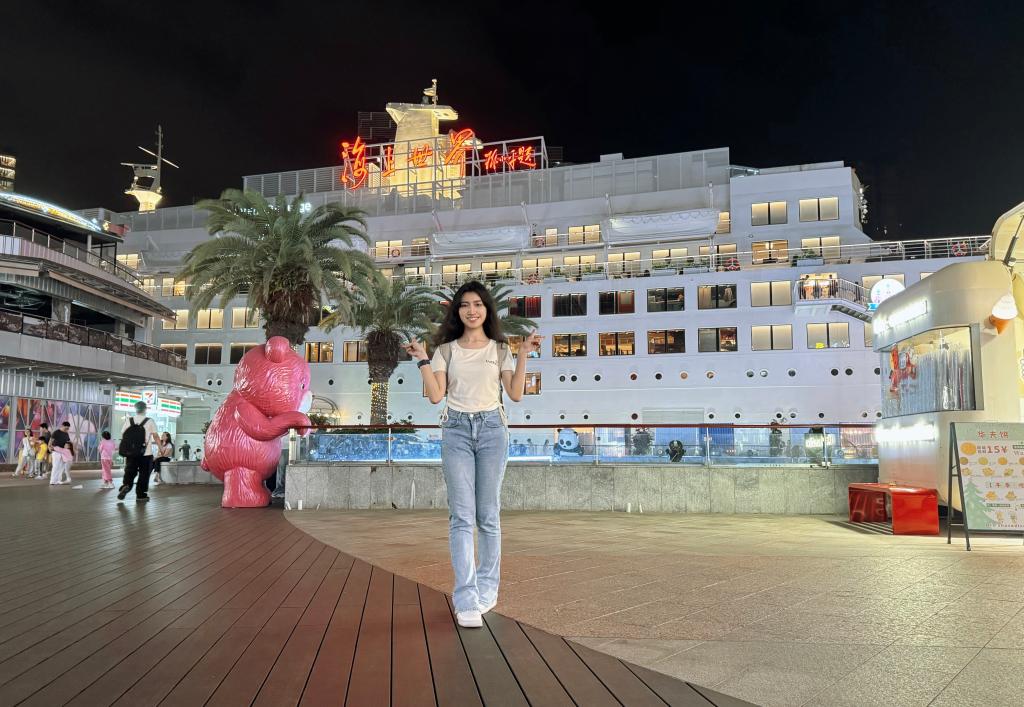
在深圳医学科学院(SMART),24岁的马来西亚女孩李炫萱第一次通过一架无人机外卖,感知到这座城市的“未来感”。这个瞬间,也成为她理解深圳的起点。
从天津大学读本科到在SMART攻读博士,她的科研兴趣在生物医学交叉研究中不断延展,也在一次次关于“为什么”的追问中逐渐重塑。在这里,她开始理解科研不仅是实验与数据,更是在多学科连接中逼近问题本质。
在这座汇聚全球青年科研者的机构中,深圳不仅是一站求学之地,也成为她重新想象科学与未来的起点。
对于24岁的马来西亚女孩李炫萱来说,对“深圳”这个词的印象,最初是一架从天而降的无人机。
那是她来到深圳医学科学院(SMART)后的一个傍晚。她站在宿舍楼下,看着一架无人机从远处缓缓飞来,精准地在指定位置下降,将一份外卖稳稳送达。
整个过程,不过几分钟。
但她盯着那架无人机看了很久。
后来回忆起那个瞬间,她总会笑着说:
“我当时脑海里只有一个念头——这很深圳。”
来深圳之前,李炫萱已经在中国生活了三年。
本科阶段,她在天津大学求学,早已适应中文环境。但深圳带给她的,是一种全然不同的感受。
不是来自摩天大楼,也不是来自城市宣传片里的那些关键词。
而是来自一个个具体、鲜活的细节:
无人机送外卖、遍布全城的创新场景、不同背景的人因为同一个梦想聚集在一起……那些曾经只存在于新闻里的“未来感”,在深圳已经成为日常。
而她也逐渐发现,自己来到这里,并不仅仅是为了读一个博士。
为什么来SMART?
李炫萱从小在马来西亚国民型华文中小学就读,中文是她的母语。
高中毕业后,她来到中国,在天津大学完成本科阶段学习。
本科期间,她主要从事低氧肿瘤纳米药物递送相关研究。
那是她第一次真正进入科研世界——实验、数据、文献、讨论。
科研带给她的吸引力,不仅仅来自发现答案的过程,更来自不断提出问题的过程。
随着研究深入,她逐渐意识到一个问题:
未来很多重要的医学问题,仅依靠单一学科已经很难解决。
癌症治疗需要化学、生物学、临床医学,也需要工程技术。
越来越多突破性的成果,都发生在学科交叉的边界地带。
当决定继续攻读博士学位时,她开始寻找一个能够真正推动学科融合的平台。
那时,她了解到了SMART。
这家年轻的科研机构给她留下了深刻印象:
汇聚来自世界各地的科研人才
鼓励不同学科之间深入合作
既关注基础科学,也关注未来的临床应用和成果转化
尝试构建一种全新的科研生态
“我希望自己的研究能够进一步走向更加前沿的交叉学科方向。”
于是,她从天津来到深圳,成为SMART与清华大学联合培养项目的第二届博士生。
从“完成任务”到“理解问题”
李炫萱的导师蔡羽轩来自中国台湾。
第一次参加组会时,她准备得十分认真:实验结果整理好了,文献也提前读过了。
然而,比起实验结果本身,导师更关注这些结果背后的科学问题:
“这个设计背后的逻辑是什么?”
“为什么这个策略值得做?”
“如果换一种思路,会怎么样?”
这些问题不断出现。
起初,她有些不习惯。过去的学习经历里,她更习惯于接受任务、完成任务。
而导师似乎更关心另一件事:
为什么。
后来她慢慢发现,蔡羽轩老师真正想培养的,并不是实验技巧,而是独立思考的能力。
有时候实验结果并不理想,导师不会首先关注结果本身,而是会追问:
“你从这次失败里学到了什么?”
这种训练方式逐渐改变了她对科研的理解——
科研不是寻找标准答案,而是不断接近问题的本质。
从关注实验结果,到不断追问问题背后的逻辑,变化的不只是研究方式,更是一种科研思维的成长。
一栋楼里的科学世界
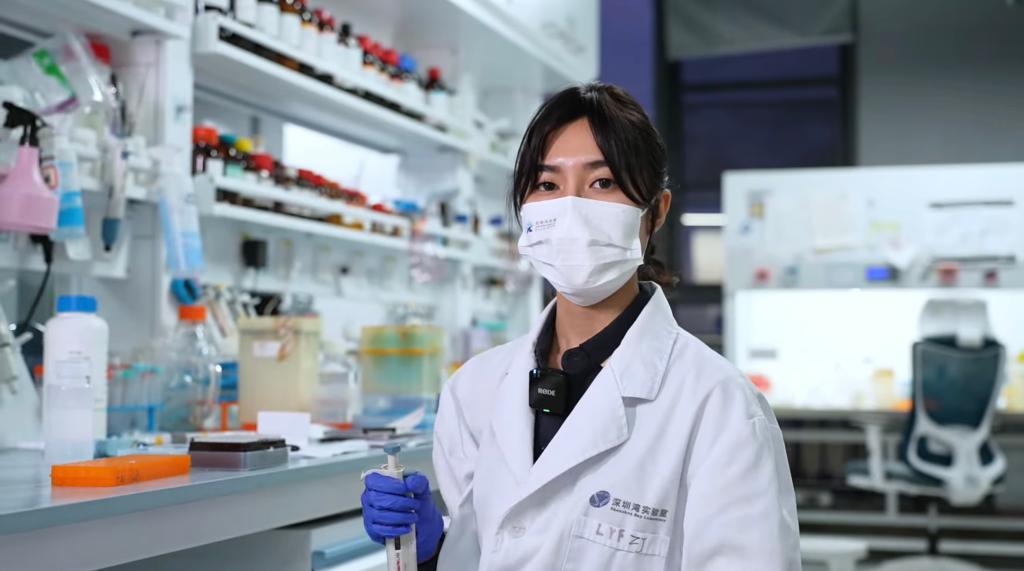
来到SMART后,李炫萱最深刻的感受之一,是这里无处不在的“连接”。
这种连接,首先体现在学科之间。
从一楼到二十楼,不过几十秒。
但电梯门每打开一次,背后都是不同的研究方向:
结构生物学、化学生物学、免疫学、神经科学、转化医学……
她第一次如此直观地看到完整的生物医学研究链条——
基础研究提出问题
技术平台提供工具
临床需求反馈方向
产业推动成果转化
过去看起来彼此独立的领域,在这里被紧密连接起来。
这种感受,在参加SMART举办的学术活动时尤为明显。
在“第三届湾区分子互作检测技术交流会”上,她一边听着科学家分享肿瘤免疫治疗等前沿研究,一边看到最新仪器平台进行实时演示。
理论与实践之间的距离,被大大缩短。
“很多时候,科研不仅仅是做实验。”她说。“更重要的是如何利用不同领域的方法,去解决真正重要的问题。”
而SMART,正在不断创造这样的机会。
科学连接着世界
今年,APEC会议将在深圳举办。
作为一名来自马来西亚的青年科研人员,李炫萱对此格外关注。
在她看来,自己的成长经历本身就是国际交流的缩影:
从马来西亚到中国,从天津到深圳,从本科生到博士生。
一路走来,她越来越感受到跨文化交流对于科研的重要意义。
“科学本身没有国界。”她说,“但不同国家会有不同的科研文化和思维方式。”
这种差异并不会形成障碍。相反,它往往会带来新的视角和新的可能。
她常常想到马来西亚丰富的天然药用植物资源,也关注中国在人工智能辅助药物筛选、生物医药创新等领域的发展。
在她看来,两者之间存在着广阔的合作空间。
而像APEC这样的平台,正让这种合作变得越来越可能。
在深圳,看见未来
博士毕业之后有什么打算?
面对这个问题,李炫萱几乎没有犹豫。
“我希望未来能够继续在生物医学交叉研究领域深耕,也会优先关注深圳和粤港澳大湾区的发展机会。”
这个答案并不是某一天突然做出的决定。
而是在一次次科研讨论中,在一次次学术交流中,在一次次看见创新发生的过程中慢慢形成的。
深圳让她看到,科研不仅发生在实验室里。
它也可以连接医院、连接企业、连接临床、连接世界。
很多年前,她从马来西亚出发。
那时候,她并不知道未来会在哪里。
而今天,她已经越来越清楚自己希望走怎样的科研道路。
对于这个来自马来西亚的年轻学子来说,深圳不再只是求学的下一站。
它也让她看见了未来科研发展的更多可能。
For 24-year-old Malaysian girl Lee Hsuan Suan, her initial impression of the word “Shenzhen” was a drone descending from the sky.
It was an evening shortly after she arrived at the Shenzhen Medical Academy of Research and Translation (SMART). She stood downstairs by her dormitory, watching a drone slowly fly in from a distance, descend precisely at the designated spot, and steadily deliver a takeout order.
The entire process took no more than a few minutes.
But she stared at that drone for a long time.
Later, recalling that moment, she would always smile and say:
“At that time, I only had one thought in my mind—this is very Shenzhen.”
Before coming to Shenzhen, Lee Hsuan Suan had already lived in China for three years.
During her undergraduate studies at Tianjin University, she had long adapted to the Chinese-language environment. However, Shenzhen gave her a completely different feeling.
It did not come from the skyscrapers, nor from the buzzwords in city promotional videos.
Rather, it came from specific, vivid details:
Drone food deliveries, innovative scenarios spread across the city, people from different backgrounds gathering together for the same dream... That “sense of the future”, which once only existed in the news, has become an everyday reality in Shenzhen.
And she gradually realized that she came here not just to pursue a Ph.D.
Why come to SMART?
Lee Hsuan Suan’s mother tongue is Chinese, and she attended National-type Chinese primary and secondary schools in Malaysia since childhood.
After graduating from high school, she came to China to complete her undergraduate studies at Tianjin University.
During her undergraduate years, she was primarily engaged in research related to hypoxic tumor nanodrug delivery.
That was her first time truly entering the world of scientific research—experiments, data, literature, and discussions.
The appeal of scientific research to her came not only from the process of discovering answers but even more from the process of constantly asking questions.
As her research deepened, she gradually realized a problem:
In the future, many important medical problems will be difficult to solve relying solely on a single discipline.
Cancer treatment requires chemistry, biology, and clinical medicine, as well as engineering technology.
More and more breakthrough achievements are happening at the intersecting boundaries of disciplines.
When she decided to pursue a doctoral degree, she began looking for a platform that could truly promote interdisciplinary integration.
It was then that she learned about SMART.
This young scientific research institution left a deep impression on her:
It gathers scientific research talents from all over the world
It encourages in-depth cooperation between different disciplines
It focuses not only on basic science but also on future clinical applications and the translation of achievements
It attempts to build a brand-new scientific research ecology
“I hope my research can advance further towards more cutting-edge interdisciplinary directions.”
Thus, she traveled from Tianjin to Shenzhen, becoming a second-cohort Ph.D. student in the joint training program between SMART and Tsinghua University.
From “Completing Tasks” to “Understanding Problems”
Lee Hsuan Suan’s supervisor, Dr. Tsai Yu-Hsuan, is from Taiwan, China.
During her first group meeting, she prepared very meticulously: the experimental results were organized, and the literature had been read in advance.
However, compared to the experimental results themselves, her supervisor paid more attention to the scientific questions behind these results:
“What is the logic behind this design?”
“Why is this strategy worth pursuing?”
“What if we approach it from a different perspective?”
These questions kept coming up.
At first, she was somewhat unaccustomed to it. In her past learning experiences, she was more used to accepting and completing tasks.
But her supervisor seemed to care more about another thing:
Why?
Later, she gradually discovered that what Dr. Tsai Yu-Hsuan truly wanted to cultivate was not experimental skills, but the ability to think independently.
Sometimes, when experimental results were less than ideal, the supervisor would not focus on the outcome first, but would press further:
“What did you learn from this failure?”
This training method gradually changed her understanding of scientific research—
Research is not about finding standard answers, but about continuously approaching the essence of the problem.
Shifting from focusing on experimental results to constantly questioning the logic behind the problems signified not only a change in research methodology but also the growth of a scientific research mindset.
A Scientific World Within One Building
Since arriving at SMART, one of Lee Hsuan Suan’s most profound feelings is the omnipresent “connection” here.
This connection is first reflected among disciplines.
Going from the first floor to the twentieth floor takes merely dozens of seconds.
But every time the elevator doors open, behind them lies a different research direction:
Structural biology, chemical biology, immunology, neuroscience, translational medicine...
For the first time, she intuitively saw the complete biomedical research chain:
Basic research poses questions
Technology platforms provide tools
Clinical needs feedback directions
Industry drives the translation of achievements
Fields that previously seemed independent of each other are tightly connected here.
This feeling is especially apparent when participating in academic events hosted by SMART.
At the “Third Bay Area Molecular Interaction Detection Technology Symposium”, she listened to scientists share cutting-edge research such as tumor immunotherapy, while simultaneously watching real-time demonstrations of the latest instrument platforms.
The distance between theory and practice was significantly shortened.
“Often, scientific research is not just about doing experiments”, she said. “What is more important is how to utilize methods from different fields to solve truly important problems.”
And SMART is continuously creating such opportunities.
Science Connects the World
This year, the APEC meeting will be held in Shenzhen.
As a young scientific researcher from Malaysia, Lee Hsuan Suan pays special attention to this.
In her view, her own growth experience is a microcosm of international exchange:
From Malaysia to China, from Tianjin to Shenzhen, from an undergraduate to a doctoral student.
Along the way, she has increasingly felt the immense significance of cross-cultural exchange in scientific research.
“Science itself has no borders,” she said. “But different countries will have different research cultures and ways of thinking.”
Such differences do not form obstacles. On the contrary, they often bring new perspectives and new possibilities.
She often thinks about Malaysia’s rich natural product resources, while also paying attention to China’s development in fields like artificial intelligence-assisted drug screening and biomedical innovation.
From her perspective, there is vast room for collaboration between the two.
And platforms like APEC are making such collaboration increasingly possible.
Seeing the Future in Shenzhen
What are her plans after graduating with her Ph.D.?
Facing this question, Lee Hsuan Suan hardly hesitated.
“I hope to continue deepening my involvement in the field of interdisciplinary biomedical research in the future, and I will also prioritize development opportunities in Shenzhen and the Guangdong-Hong Kong-Macao Greater Bay Area.”
This answer was not a sudden decision made one day.
Rather, it was slowly formed through countless research discussions, academic exchanges, and moments of witnessing innovation happen.
Shenzhen made her see that scientific research does not only happen in the laboratory.
It can also connect hospitals, connect enterprises, connect clinical practice, and connect the world.
Many years ago, she set off from Malaysia.
At that time, she did not know where her future would lie.
Today, however, she is becoming increasingly clear about the scientific research path she wants to take.
For this young student from Malaysia, Shenzhen is no longer just the next stop in her academic journey.
It has also allowed her to see more possibilities for the future development of scientific research.
供稿 | 沈阳 李炫萱
指导老师 | 远山 路倩
欢迎投稿、建议 | media@szbl.ac.cn


 粤公网安备44031102000926号